
How living alone became a cultural flex: Inside the free will living trend
Saloni Jha | Feb 24, 2026, 18:32 IST
The viral free will trend shows how living alone turns solitude into chaotic freedom.

Image credit : Instagram/iits_wahab7 | Welcome to the “Free Will” living-alone trend, where social media users are documenting the mildly unhinged, deeply relatable joy of being the sole ruler of their domestic kingdom.
There is a very specific kind of power that unlocks the moment you close your front door and realise no one else lives there.
Not your flatmate. Not your partner. Not even that one aunt who comments on how late you are eating dinner.
Welcome to the “Free Will” living-alone trend, where social media users are documenting the mildly unhinged, deeply relatable joy of being the sole ruler of their domestic kingdom.
![Instagram/iits_wahab7 | Suddenly, you are not “acting normal.” You are just… existing. And that existence can get weird.]()
Most of us do not realise how much we perform daily life. We sit properly. We eat at acceptable hours. We pretend we did not just open the fridge for the fourth time in ten minutes.
Living alone removes the invisible audience.
Suddenly, you are not “acting normal.” You are just… existing. And that existence can get weird.
Creators across TikTok and Instagram are leaning into this idea: when nobody is watching, free will becomes visible. It becomes chaotic. It becomes funny.
Not your flatmate. Not your partner. Not even that one aunt who comments on how late you are eating dinner.
Welcome to the “Free Will” living-alone trend, where social media users are documenting the mildly unhinged, deeply relatable joy of being the sole ruler of their domestic kingdom.
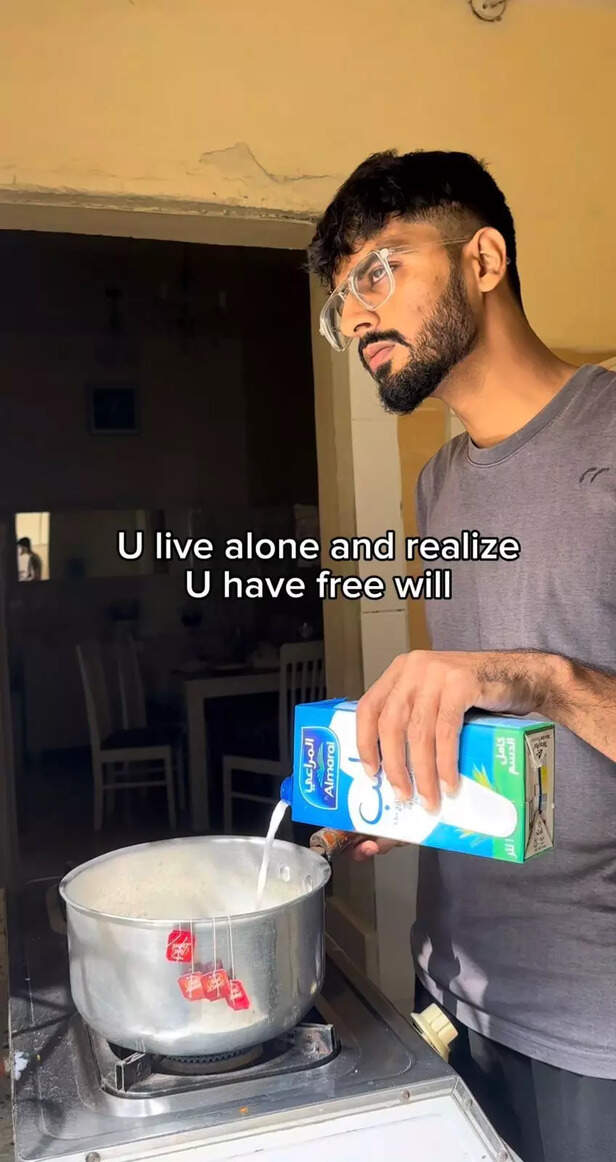
Image credit : Instagram/iits_wahab7 | Suddenly, you are not “acting normal.” You are just… existing. And that existence can get weird.
When the social gaze disappears
Living alone removes the invisible audience.
Suddenly, you are not “acting normal.” You are just… existing. And that existence can get weird.
Creators across TikTok and Instagram are leaning into this idea: when nobody is watching, free will becomes visible. It becomes chaotic. It becomes funny.
Goblin mode is a lifestyle
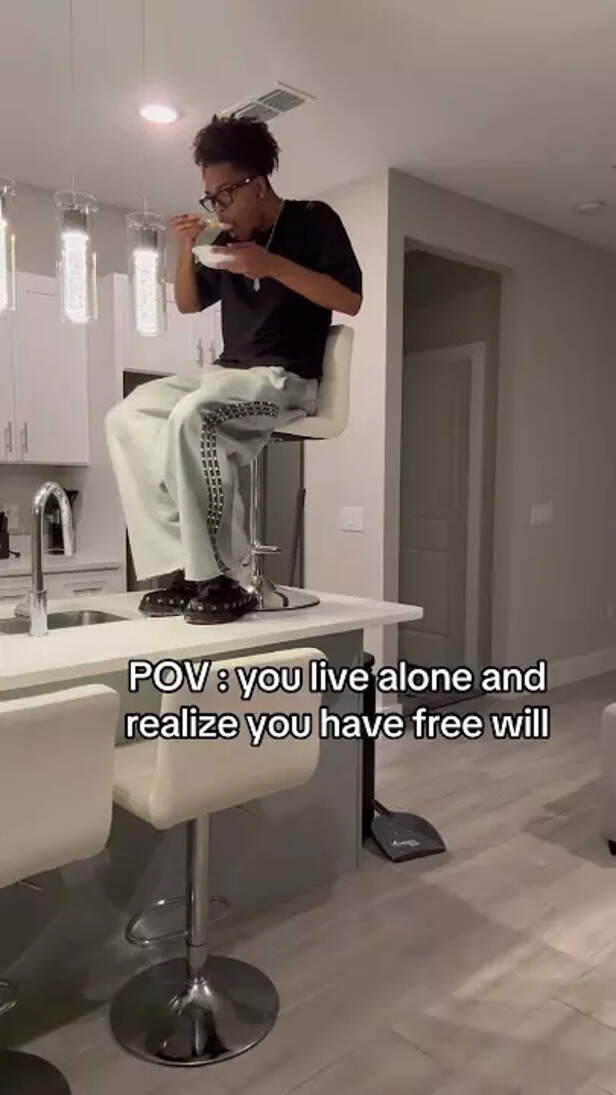
Eating a whole rotisserie chicken over the sink at 11:00 PM because you can. Making pasta from scratch at 4:00 AM because the craving felt urgent. Rejecting the concept of structured mealtimes entirely.
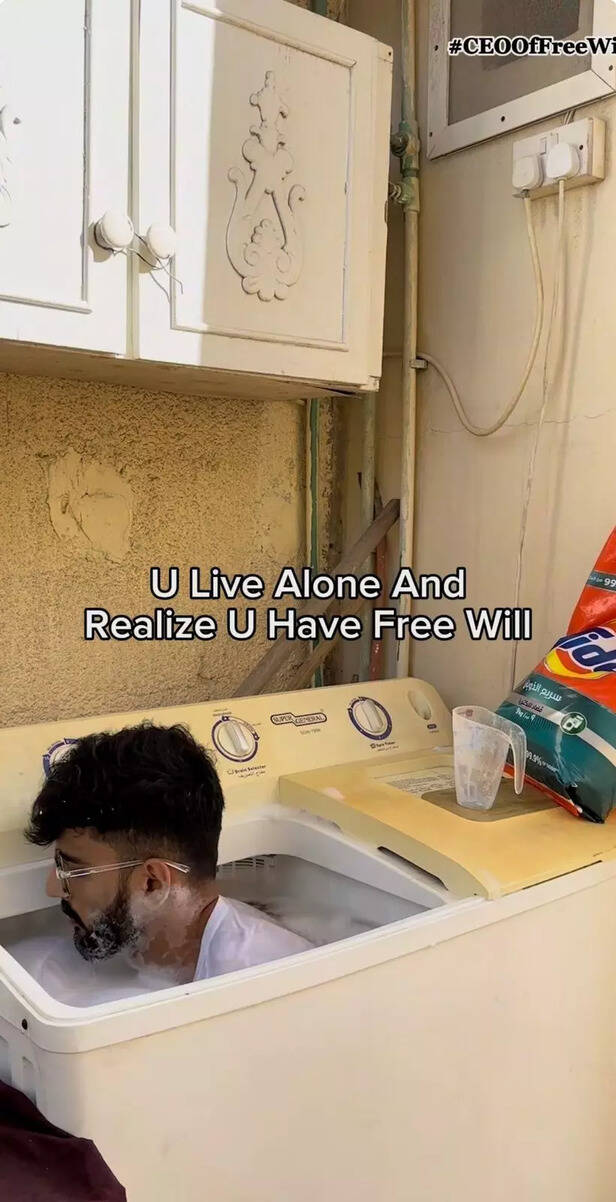
Image credit : Instagram/iits_wahab7 | Creators across TikTok and Instagram are leaning into this idea: when nobody is watching, free will becomes visible. It becomes chaotic. It becomes funny.
It is not about laziness. It is about autonomy.
Then there is the “Sims energy” behaviour. People film themselves standing still in the kitchen for several minutes, staring into nothingness. Pacing in circles while listening to a podcast. Rearranging furniture at 2:00 AM because the vibes felt spiritually incorrect.
No explanation. No justification. Just free will.
At its heart, this trend is not about chaos. It is about solitude rebranded.The radical joy of being unobserved
For years, living alone was framed as lonely or transitional. Now, it is aspirational. It is proof of independence. It is adulthood without commentary.
Image credit : Instagram/iits_wahab7 | One of the most iconic manifestations of the trend is what the internet lovingly calls goblin behaviour.
People are singing full concerts to empty rooms. Talking to themselves out loud. Wearing the same oversized hoodie for three consecutive days because comfort outranks aesthetics.The free will trend reframes solitude as sovereignty. It suggests that true adulthood is not just paying rent. It is existing in a space where your whims are the only rules.
And honestly? That lightness feels powerful.
What happened to Kara Braxton? WNBA champ dies in crash
By Karen Noronha

Russell Brand pleads not guilty to sexual assault charges
By Emmy Azad

How 'celebrities born in another country' trend is taking over
By Saloni Jha

Sam Altman just said what we've always felt
By Sneha Kumari

Zachery Ty Bryan sentenced to 16 months after DUI arrests
By Emmy Azad

Who is Maria Julissa?
By Nillohit Bagchi

Is Richard Dean Bird dead or still missing?
By Sneha Kumari

