

Elon Musk’s Starlink’s lead at risk? Amazon drops $11.57 billion on globalstar to rewrite the satellite internet power game
Nancy Jaiswal | Apr 14, 2026, 20:54 IST
Amazon’s $11.57 billion Globalstar acquisition marks a decisive step into the satellite internet race, intensifying competition with Starlink. The deal brings satellites, spectrum, and subscribers while securing Apple’s Emergency SOS services continuity.

Image credit : Indiatimes | Amazon challenges Starlink with globalstar deal
The satellite internet sector is entering a more competitive phase as Amazon confirmed its $11.57 billion acquisition of Globalstar. The move places Amazon in direct competition with Starlink, currently the largest provider of satellite-based internet services globally. The acquisition signals a strategic push by Amazon to accelerate its presence in a market where scale, infrastructure, and regulatory timelines are critical.Through this acquisition, Amazon gains immediate access to Globalstar’s network of roughly two dozen low-Earth orbit satellites. This addition is significant given the current stage of Amazon’s Project Kuiper, which operates over 200 satellites and aims to deploy approximately 3,200 by 2029. Regulatory requirements mandate that about half of this constellation must be operational by July 2026.
![Amazon challenges Starlink with globalstar deal]() In comparison, Starlink, operated by SpaceX, already has around 10,000 satellites in orbit and serves more than 9 million users worldwide. This existing scale has positioned Starlink as the market leader.
In comparison, Starlink, operated by SpaceX, already has around 10,000 satellites in orbit and serves more than 9 million users worldwide. This existing scale has positioned Starlink as the market leader.
By acquiring Globalstar, Amazon also secures its spectrum assets and an established subscriber base of over 800,000 users. These additions provide a practical shortcut in reducing the gap with Starlink. Amazon is also preparing to launch satellite internet services for consumers later this year, and the acquisition is expected to support and potentially accelerate that rollout.
Under the agreement, Globalstar shareholders are offered a choice: either $90 in cash per share or 0.3210 shares of Amazon stock for each share held. The transaction is expected to close next year, subject to regulatory approvals and specific satellite deployment milestones.
![Amazon’s $11.57 billion Globalstar acquisition marks a decisive step into the satellite internet race]() Financial markets reacted positively to the announcement. Globalstar shares rose more than 9% in premarket trading, adding to gains of over 6% recorded in the previous two weeks amid early reports of negotiations. The stock had nearly doubled over the past year and was already up about 12% this year before the acquisition news. Amazon’s shares also saw a modest increase of about 1% following the announcement.
Financial markets reacted positively to the announcement. Globalstar shares rose more than 9% in premarket trading, adding to gains of over 6% recorded in the previous two weeks amid early reports of negotiations. The stock had nearly doubled over the past year and was already up about 12% this year before the acquisition news. Amazon’s shares also saw a modest increase of about 1% following the announcement.
A key component of the deal involves Apple, which has invested approximately $1.5 billion in Globalstar and holds around a 20% stake. Apple relies exclusively on Globalstar’s satellite network to power its Emergency SOS and Find My features across iPhones and Apple Watch devices.
To address potential concerns, Amazon and Apple have entered into a parallel agreement ensuring that these satellite-based safety services will continue uninterrupted despite the change in ownership. This arrangement removes a major uncertainty that could have complicated the acquisition.
Globalstar, based in Covington, Louisiana, has also been expanding its satellite constellation with support from Apple. The planned network expansion is expected to increase its total to 54 satellites, including backup units.
Amazon’s acquisition represents a clear escalation in the competitive landscape. With its financial capacity, cloud infrastructure, and distribution network, the company is positioned to become a credible challenger to Starlink. However, closing the gap will depend on execution, regulatory progress, and the ability to scale operations efficiently.
![A direct challenge to Starlink’s market leadership]() Globalstar’s spectrum holdings, particularly in L-band and S-band frequencies, add further strategic value. These frequencies enable direct-to-device communication, allowing standard smartphones to connect to satellites without requiring specialized hardware.
Globalstar’s spectrum holdings, particularly in L-band and S-band frequencies, add further strategic value. These frequencies enable direct-to-device communication, allowing standard smartphones to connect to satellites without requiring specialized hardware.
The coming year will be critical in determining whether Amazon can translate these combined assets into a service capable of competing with Starlink’s established infrastructure and large user base.
Globalstar assets offer Amazon a faster route to scale

Image credit : X/ElonMuskAOC | Amazon challenges Starlink with globalstar deal
By acquiring Globalstar, Amazon also secures its spectrum assets and an established subscriber base of over 800,000 users. These additions provide a practical shortcut in reducing the gap with Starlink. Amazon is also preparing to launch satellite internet services for consumers later this year, and the acquisition is expected to support and potentially accelerate that rollout.
Deal structure and market response

Image credit : X/ElonMuskAOC | Amazon’s $11.57 billion Globalstar acquisition marks a decisive step into the satellite internet race
Apple partnership ensures continuity of satellite services
To address potential concerns, Amazon and Apple have entered into a parallel agreement ensuring that these satellite-based safety services will continue uninterrupted despite the change in ownership. This arrangement removes a major uncertainty that could have complicated the acquisition.
Globalstar, based in Covington, Louisiana, has also been expanding its satellite constellation with support from Apple. The planned network expansion is expected to increase its total to 54 satellites, including backup units.
A direct challenge to Starlink’s market leadership
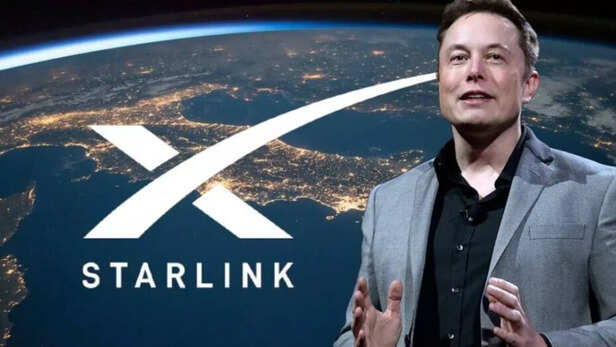
Image credit : X/ElonMuskAOC | A direct challenge to Starlink’s market leadership
The coming year will be critical in determining whether Amazon can translate these combined assets into a service capable of competing with Starlink’s established infrastructure and large user base.

How Euphoria turned makeup into a mood, not a rulebook
By Sneha Kumari

Who is Vaishali Rameshbabu?
By Sneha Kumari

Why guochao cultural is the new cool for us
By Saloni Jha

Taylor Swift praises Dakota Johnson’s honesty
By Nancy Jaiswal

When care sounds like control: What does 'Guilt-Tripping' really mean?
By Sneha Kumari

Is seagulling the new situationship for us?
By Saloni Jha

US tightens Iran blockade, repeats nuclear warning
By Nancy Jaiswal


