
No rebrand, no gimmicks: Raw Mango’s London debut rewrote the script on Indian fashion
Sneha Kumari | Feb 25, 2026, 09:51 IST
At London Fashion Week, Raw Mango made a confident debut with It’s Not About The Flower.

Image credit : Instagram | @londonfashionweek | Raw Mango’s London Debut Rewrote the Script on Indian Fashion
At London Fashion Week, there's always a rush to spot the next big thing. But this season, the real power move wasn't loud, viral or trend-chasing. It was quite confident.
Indian label Raw Mango made its London debut, and instead of reinventing itself for a new audience, it doubled down on who it already is.
Founded in 2008 by textile designer Sanjay Garg, Raw Mango has built its reputation reworking traditional Indian textiles into modern silhouettes. Now imagine handwoven silks, heritage techniques and deep collaboration with karigars (skilled artisans) across Rajasthan, Madhya Pradesh, West Bengal and Varanasi. This isn't fast fashion. It's fashion with memory. Indian label Raw Mango made its London debut, and instead of reinventing itself for a new audience, it doubled down on who it already is.
And for Autumn/Winter 2026, that memory came threaded with flowers.
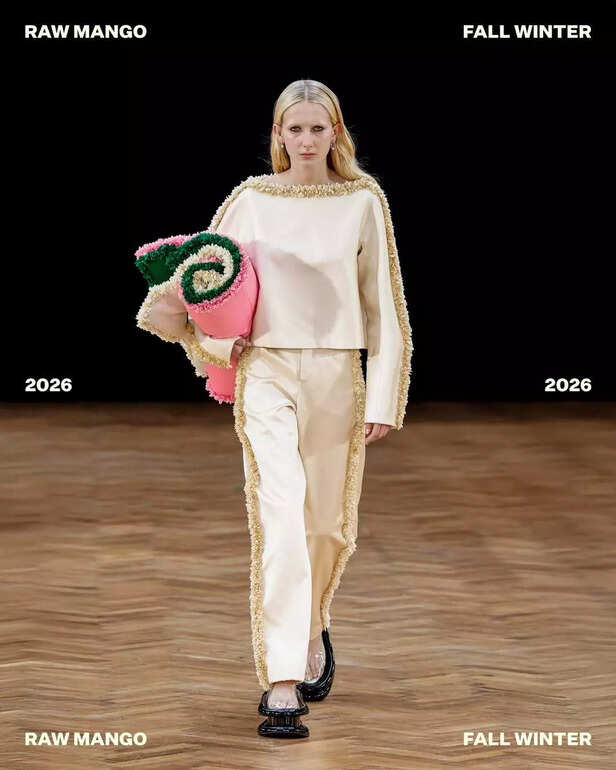
Image credit : Instagram | @rawmango | Raw Mango at London Fashion Week
It's not about the flower
Instead of focusing on the flower as decoration, Garg zoomed out to the garland, an object that moves between sacred rituals, weddings, temples, markets and everyday life across South Asia. If you have ever seen jasmine strings at a ceremony or draped over a photo frame, you know the vibe.
It's intimate. It's symbolic, and it's everywhere.
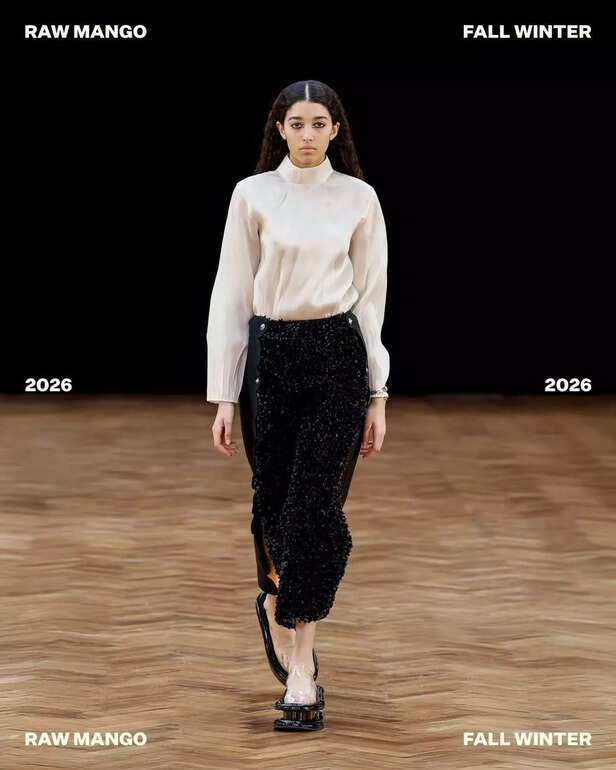
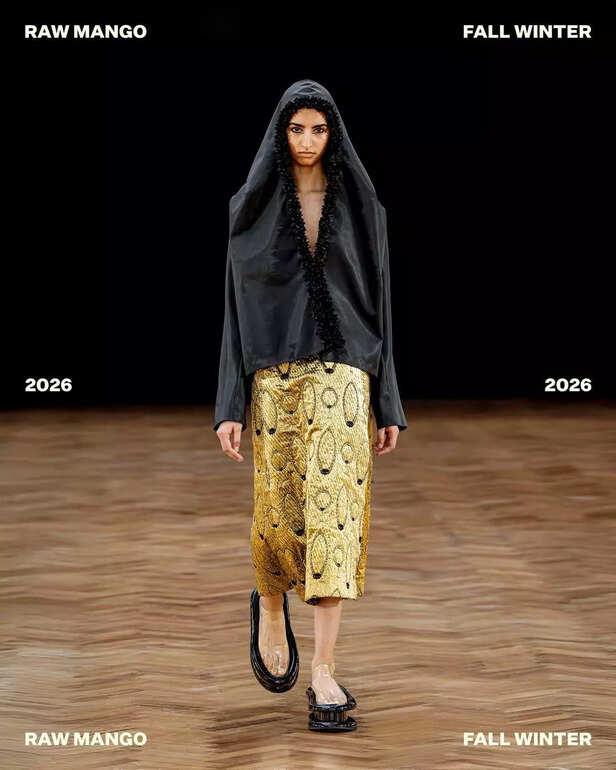
Translucent black saris carried delicate chanderi mogra embroidery that felt built into the fabric, not just placed on top. Ballooned skirts were hemmed with Kanjeevaram florets that grounded the silhouette instead of overpowering it.Raw Mango didn't romanticise it. It restructured it.
Bare torsos wrapped in thick ropes of jasmine. Rolled handbags shaped like garland sacks. Transparent glass footwear that made them look almost suspended.
There was gold. There was silk. There was hand embroidery. But nothing felt chaotic. The energy wasn't "look how ornate this is". It was "look how controlled this is".
Image credit : Instagram | @rawmango | Raw Mango’s Quiet Arrival in LondonWell, global fashion often compresses South Asian design into two extremes: hyper-opulent bridal energy or colourful maximalism. There's this unspoken assumption that Indian fashion must be loud to be authentic.Not your stereotypical “Indian fashion”
Raw Mango rejected that binary.
Yes, there was silk. Yes, there was gold. Yes, there was colour. But everything felt measured. Even the neon tones were controlled. Even the shine felt disciplined.
Moreover, it wasn't trying to perform 'Indianness' or trying to neutralise it either. It just was.The show unfolded under the glass canopy of the Royal Horticultural Halls. Jasmine garlands lined the runway. Market-inspired sounds filled the space.London was just the location
But here's what's interesting: the setting didn't overpower the clothes. It would have been easy to turn the moment into a spectacle, to dramatise cultural references for impact. Instead, everything felt grounded. Intentional and almost restrained.
London didn't transform Raw Mango. It simply reframed it and that's a big difference.
Image credit : Instagram | @rawmango | Raw Mango Answers at London Fashion WeekWe are in an era where global fashion visibility often comes with pressure. There is a pressure to simplify your story, make it digestible, make it market-friendly and make it "universal".Why does this matter right now?
And Raw Mango did none of that. It didn't translate itself for a Western audience and didn't over-explain it. It didn't chase virality. And ironically, that’s what made it feel contemporary.
Tesla sales drop again as BYD surges ahead
By Nancy Jaiswal

Low-waist jeans are back and we are living our best Y2K life
By Iraa Paul

Chris Hemsworth on why he left Los Angeles
By Nancy Jaiswal

Xavier Trudeau reveals what Katy Perry told him
By Nancy Jaiswal

Jak White reveals secrets from Bonnie Blue's 400-men event
By Karen Noronha

So it's official: Eli and Kimi are done.
By Shivani Negi

From ghosting to grand gestures: Why ‘storybooking’ trend is making dating feel like Bridgerton again
By Saloni Jha

