
The new me era is never ending: Why we keep rebranding every six months
Iraa Paul | Feb 22, 2026, 11:50 IST
Gen Z has turned personal growth into eras, constantly reinventing aesthetics, routines, and even personalities every few months.

Image credit : Freepik | Is rebranding ourselves every six months the new Gen Z hobby?
Is rebranding ourselves every six months the Gen Z hobby? If you ask our camera rolls, Pinterest boards, and Instagram bios, the answer might be a loud, unapologetic yes.One month we’re in our ‘clean girl era,’ drinking iced matcha and waking up at 6 a.m. The next, we’re in our ‘villain era,’ romanticising red lipstick, leather jackets, and cutting off toxic situations. Before that? The ‘soft life,’ the ‘that girl’ routine, the “main character energy” reset. Our lives feel like seasons of a show that keeps getting renewed, and we are both the writers and the lead characters.
But is this constant rebranding just aesthetic chaos, or is it something deeper?
![The new me era is never ending: Why we keep rebranding every six months]()
Gen Z didn’t just grow up online, we grew up performing online. From early Facebook days to the Instagram highlight era, and now hyper-curated Reels and aesthetic dumps, we’ve always known that identity can be edited.Unlike previous generations, we didn’t have the luxury of a “private awkward phase.” Our awkwardness lives forever in archived posts and tagged photos. So rebranding becomes survival. If we can’t erase the old version, we can at least outgrow it loudly. Rebranding isn’t just about aesthetics. It’s about reclaiming the narrative.
When we switch from chaotic party girl to mindful journaling girl, or from gym bro to “I read poetry now,” we’re not necessarily being fake. We’re experimenting. We’re trying to see which version of ourselves feels most authentic, or at least most aligned with who we want to become.
We’ve turned growth into eras. ‘Healing era.’ ‘Grind era.’ ‘No boys 2026.’ ‘Digital detox summer.’ Everything has a title now. Why? Because naming it makes it feel intentional.
Calling something an era gives us structure in a world that feels unstable. We’ve grown up with climate anxiety, economic uncertainty, job market chaos, and a pandemic that hit during formative years. Stability is rare. So we create it in the only place we fully control, our personal branding.
When life feels unpredictable, changing your hair color or aesthetic is oddly empowering. It’s a visible sign of internal change. Even if the transformation starts as external, sometimes it becomes real along the way.
![The new me era is never ending: Why we keep rebranding every six months]()
But let’s be honest, it’s not all wholesome self-growth. There’s pressure. A lot of it.The algorithm rewards novelty. New looks, new opinions, new hobbies. Reinvention gets engagement. Staying the same? That’s “boring.” And in a digital world where attention feels like currency, being boring feels like disappearing. So we reinvent.
We switch aesthetics like playlists. We archive posts that don’t match the current vibe. We soft-launch new personalities through cryptic captions and curated photo dumps. Sometimes it feels empowering. Sometimes it feels exhausting. There’s a thin line between growth and performance.
Are we changing because we want to? Or because we’re afraid of being perceived as stagnant?
The truth is, Gen Z views identity differently. We don’t see it as fixed. We see it as fluid. Careers aren’t linear. Relationships aren’t guaranteed. Even geography isn’t permanent. If everything else can change, why can’t we?
Older generations might interpret constant rebranding as inconsistency. But to us, it’s adaptability. We’ve watched entire industries collapse and new ones appear overnight. We know that flexibility is survival.
If we outgrow a mindset, we don’t feel obligated to stick to it for the sake of consistency. If a belief no longer fits, we evolve. If a friend group doesn’t align, we move on. Rebranding is our way of saying: I am allowed to change.
![The new me era is never ending: Why we keep rebranding every six months]()
However, there’s a downside. When growth becomes aesthetic, it risks becoming shallow. Journaling becomes a photo prop. Therapy language becomes trendy captions. Self-care becomes consumerism, new planners, new skincare, new clothes to match the “new me.”Sometimes we mistake buying things for becoming things. You can’t purchase discipline. You can’t order emotional maturity with next-day delivery. Real growth is boring and repetitive. It’s uncomfortable conversations, unglamorous routines, and quiet consistency. It doesn’t always look good in a carousel post. And when we constantly chase the next era, we might avoid sitting with who we are right now.
There’s a narrative that Gen Z is confused, commitment-phobic, chronically online, always switching paths. But maybe what looks like instability is actually exploration.
Our parents often chose careers, partners, and lifestyles in their early twenties and stuck with them. We don’t feel that pressure in the same way. We’ve seen how staying in the wrong job or relationship “for stability” can lead to burnout and resentment. So we try. We pivot. We experiment.
Rebranding every six months might not be unserious. It might be data collection. Each era teaches us something. The gym era teaches discipline. The single era teaches independence. The creative era teaches self-expression. Even the messy era teaches boundaries.
Not every version of you is meant to last forever. Some versions exist to prepare you for the next one.
From the inside, it doesn’t always feel like rebranding. It feels like becoming. Becoming more aware. More honest. More selective. More aligned. Yes, sometimes it’s chaotic. Yes, sometimes it’s influenced by trends. But underneath the aesthetic shifts is a generation trying to figure itself out in real time, with an audience.
Is it healthy to completely reinvent yourself every six months? Probably not if it’s rooted in insecurity or external validation. But if it’s rooted in curiosity and self-discovery, maybe it’s just part of growing up in 2026. Maybe our hobby isn’t rebranding. Maybe it’s refusing to stay stuck.
And in a world that changes this fast, that might not be a flaw. It might be our greatest skill.
But is this constant rebranding just aesthetic chaos, or is it something deeper?

Image credit : Freepik | Gen Z didn’t just grow up online, we grew up performing online.
We grew up curating ourselves
When we switch from chaotic party girl to mindful journaling girl, or from gym bro to “I read poetry now,” we’re not necessarily being fake. We’re experimenting. We’re trying to see which version of ourselves feels most authentic, or at least most aligned with who we want to become.
The era-ification of identity
Calling something an era gives us structure in a world that feels unstable. We’ve grown up with climate anxiety, economic uncertainty, job market chaos, and a pandemic that hit during formative years. Stability is rare. So we create it in the only place we fully control, our personal branding.
When life feels unpredictable, changing your hair color or aesthetic is oddly empowering. It’s a visible sign of internal change. Even if the transformation starts as external, sometimes it becomes real along the way.

Image credit : Freepik | We’ve turned growth into eras. ‘Healing era.’ ‘Grind era.’
The pressure to evolve publicly
We switch aesthetics like playlists. We archive posts that don’t match the current vibe. We soft-launch new personalities through cryptic captions and curated photo dumps. Sometimes it feels empowering. Sometimes it feels exhausting. There’s a thin line between growth and performance.
Are we changing because we want to? Or because we’re afraid of being perceived as stagnant?
Identity as fluid, not fixed
Older generations might interpret constant rebranding as inconsistency. But to us, it’s adaptability. We’ve watched entire industries collapse and new ones appear overnight. We know that flexibility is survival.
If we outgrow a mindset, we don’t feel obligated to stick to it for the sake of consistency. If a belief no longer fits, we evolve. If a friend group doesn’t align, we move on. Rebranding is our way of saying: I am allowed to change.
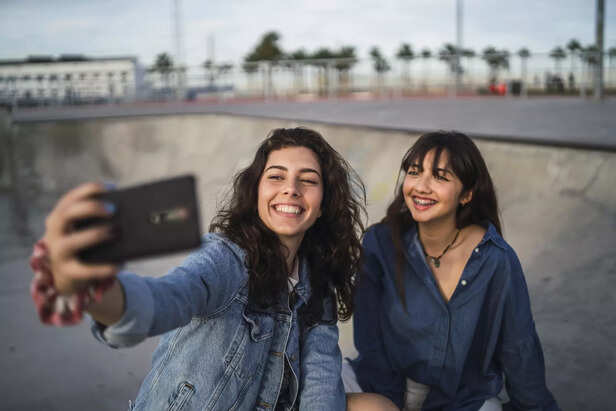
Image credit : Freepik | But let’s be honest, it’s not all wholesome self-growth
The danger of aestheticising growth
Are we actually lost or just exploring?
Our parents often chose careers, partners, and lifestyles in their early twenties and stuck with them. We don’t feel that pressure in the same way. We’ve seen how staying in the wrong job or relationship “for stability” can lead to burnout and resentment. So we try. We pivot. We experiment.
Rebranding every six months might not be unserious. It might be data collection. Each era teaches us something. The gym era teaches discipline. The single era teaches independence. The creative era teaches self-expression. Even the messy era teaches boundaries.
Not every version of you is meant to last forever. Some versions exist to prepare you for the next one.
Maybe it’s not rebranding, it’s becoming
Is it healthy to completely reinvent yourself every six months? Probably not if it’s rooted in insecurity or external validation. But if it’s rooted in curiosity and self-discovery, maybe it’s just part of growing up in 2026. Maybe our hobby isn’t rebranding. Maybe it’s refusing to stay stuck.
And in a world that changes this fast, that might not be a flaw. It might be our greatest skill.
Salon approved: 5 most wanted hair colours everyone's asking for in 2026
By Sneha Kumari

We turned delulu into a lifestyle, here’s why it feels necessary
By Iraa Paul

Kate-Meghan rift: ‘Abrasive’ claim in new book
By Nancy Jaiswal

Rob Jetten makes history as first openly gay Dutch PM
By Emmy Azad

Who is Rob Jetten? Meet the Netherlands' first openly gay prime minister
By Nillohit Bagchi

Stargate delayed as Musk’s doubts resurface
By Nancy Jaiswal

The real Shaadi star isn't Paneer Butter Masala anymore – it's Maggi
By Sneha Kumari

