
Who is 'Punch, the monkey' and why is everyone crying over him like it's way too personal?
Garima Satija | Feb 20, 2026, 14:54 IST
A baby monkey, a plush toy, and Gen Z in tears. Why Punch's viral story feels way too personal, and what it says about us.

Image credit : X/ichikawa_zoo | Punch the monkey
If your social media feed has felt emotionally unsafe recently, blame it on the tiny Japanese macaque.
For those living under a rock, Punch, born in July 2025 as Panchi-kun, is a 6-month-old baby macaque at the Ichikawa City Zoo who has gone viral for carrying around a tiny orangutan plush toy like it's his literal lifeline. And the internet? It's emotionally compromised.
Punch was abandoned by his mother shortly after birth. Zookeepers stepped in to raise him and have been posting updates as he slowly adjusts to life with the troop. At first, it was just cute. Baby monkey. Tiny plushie. But then, things got real.
Videos showed Punch sitting alone and clutching the toy. Several other clips captured him being scolded, even lightly bullied, by older macaques while he held onto it tighter. He looked like every person who has ever tried to join a new friend group and immediately regretted it.
Suddenly, everyone especially the Gen Z was not just watching, we were projecting, because it was not just a monkey holding a toy. It was someone trying to survive socially while gripping the one thing that makes them feel safe. The good news? By early February, the zoo shared that Punch has been gradually building connections. Another monkey groomed him. He is interacting more. He still gets scolded sometimes (because he's 'learning the rules of the group'), but he is finding his place. And yes, he still carries the plushie.
The zoo has even reported an increase in visitors. People are lining up to see this tiny macaque and his emotional support orangutan in real life. Because apparently, we all needed this storyline.
Psychologically, this makes sense. Comfort objects are called transitional objects in attachment theory. They provide security without the risks of human relationships. No rejection. No mixed signals. No sudden energy shifts. Just stability.
The generation which has been raised on social media anxiety, economic uncertainty, pandemic isolation and dating app fatigue, predictable comfort feels elite.
![Punch, the monkey]()
Furthermore, research shows tactile comfortlike hugging a stuffed animal or wearing a soft hoodie, relaxes your brain. So when Punch carries his plushie everywhere like it's sacred, that's not his weakness. That's rather regulation. It's not regressive, it's coping.
Gen Z gets labeled "immature" for still loving plushies, character toys, or comfort rituals. But look at the bigger picture. We live in a hyper-stimulated world that entails infinite scrolling, constant comparison, financial anxiety before 25, and 'healing' while still functioning. Of course we want something soft and predictable.
What hits about Punch is not just that he loves his toy. It is how desperately he holds it. That's the part that makes us feel seen and slightly exposed. Because so many of us walk around pretending like we are hyper-independent, healed, detached - while quietly clinging to our own invisible plushies.
![Punch the monkey]()
We often say that we don't need anyone. We say we don't need anyone. But we rewatch comfort shows to feel less alone. How many times have you rewatched Big Bang Theory, The Office or Friends? We keep old hoodies because they feel like safety, don't we? We create tiny rituals to survive the day. So, Punch is not dramatic. He is honest. And maybe this is why we are collectively sobbing over a baby monkey on the internet, but because in a world that feels unstable, he reminds us that wanting something soft to hold onto doesn't make us weak. It make sus human. We are all Punch aren't we?
For those living under a rock, Punch, born in July 2025 as Panchi-kun, is a 6-month-old baby macaque at the Ichikawa City Zoo who has gone viral for carrying around a tiny orangutan plush toy like it's his literal lifeline. And the internet? It's emotionally compromised.
The backstory has sent us over the edge!
Videos showed Punch sitting alone and clutching the toy. Several other clips captured him being scolded, even lightly bullied, by older macaques while he held onto it tighter. He looked like every person who has ever tried to join a new friend group and immediately regretted it.
Suddenly, everyone especially the Gen Z was not just watching, we were projecting, because it was not just a monkey holding a toy. It was someone trying to survive socially while gripping the one thing that makes them feel safe. The good news? By early February, the zoo shared that Punch has been gradually building connections. Another monkey groomed him. He is interacting more. He still gets scolded sometimes (because he's 'learning the rules of the group'), but he is finding his place. And yes, he still carries the plushie.
The zoo has even reported an increase in visitors. People are lining up to see this tiny macaque and his emotional support orangutan in real life. Because apparently, we all needed this storyline.
🥹🙊 Baby Punch gets the warmest hug
Today, the adult monkey Onsing wrapped little Punch in a tight embrace — easily the coziest video you’ll see today 🫂 pic.twitter.com/Mvhv1Mpexd
— NEXTA (@nexta_tv) February 20, 2026
Why this hit so deep?
The generation which has been raised on social media anxiety, economic uncertainty, pandemic isolation and dating app fatigue, predictable comfort feels elite.
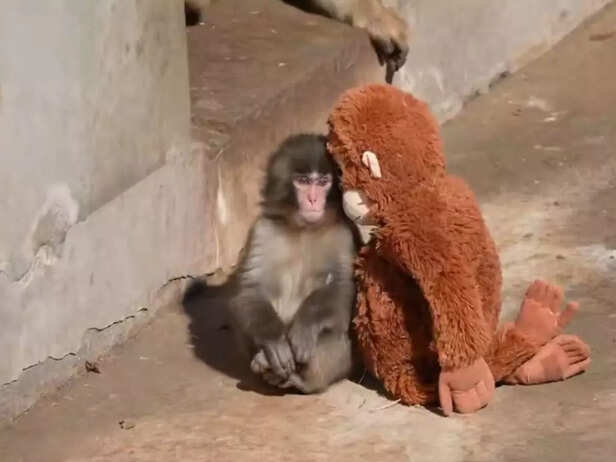
Image credit : X/ichikawa_zoo | Punch, the monkey
Furthermore, research shows tactile comfortlike hugging a stuffed animal or wearing a soft hoodie, relaxes your brain. So when Punch carries his plushie everywhere like it's sacred, that's not his weakness. That's rather regulation. It's not regressive, it's coping.
Gen Z gets labeled "immature" for still loving plushies, character toys, or comfort rituals. But look at the bigger picture. We live in a hyper-stimulated world that entails infinite scrolling, constant comparison, financial anxiety before 25, and 'healing' while still functioning. Of course we want something soft and predictable.
Why Punch feels like a mirror?
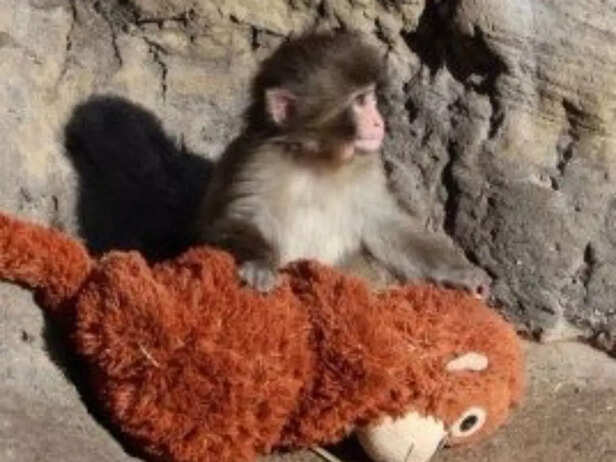
Image credit : X/ichikawa_zoo | Punch, the monkey
We often say that we don't need anyone. We say we don't need anyone. But we rewatch comfort shows to feel less alone. How many times have you rewatched Big Bang Theory, The Office or Friends? We keep old hoodies because they feel like safety, don't we? We create tiny rituals to survive the day. So, Punch is not dramatic. He is honest. And maybe this is why we are collectively sobbing over a baby monkey on the internet, but because in a world that feels unstable, he reminds us that wanting something soft to hold onto doesn't make us weak. It make sus human. We are all Punch aren't we?
So it's official: Eli and Kimi are done.
By Shivani Negi

From ghosting to grand gestures: Why ‘storybooking’ trend is making dating feel like Bridgerton again
By Saloni Jha

Who is 9trevv, and why is his El Mencho Cartel video going viral? Here's what we know
By Sneha Kumari

Princy Parikh deletes David Miller reel after rape threats
By Karen Noronha

What is the PM baddie banao yojana
By Saloni Jha

Did GTA 6 just secretly reveal its massive map?
By Sneha Kumari

Bonnie Blue's baby daddy hunt: DNA swabs, 400 suspects, and more
By Shivani Negi

