
Indian-American engineer jailed 47 days over false Walmart kidnapping claim sparks national outrage: 'A grave miscarriage of justice…'
Simran Guleria | Dec 30, 2025, 10:19 IST

Image credit : X| @GAFollowers| Indian-American man jailed over false claim sparks outrage
Indian-American engineer spends 47 days in jail after false kidnapping accusation at Walmart, igniting nationwide outrage and calls for accountability.
Some stories compel a nation to face uncomfortable truths it would often prefer to overlook. The wrongful arrest of Mahendra “Mick” Patel, 57 a Indian-American engineer, is one such instance, not because the circumstances were ambiguous, but because the legal and social systems reacted precisely as they were structured to, exposing deep-seated biases and procedural failures that allowed an innocent man’s life to be upended.
![Mahendra Patel, the Indian-American engineer wrongfully arrested]()
On 18 March 2025, Patel visited a Walmart in Acworth, Georgia, to buy medication for his elderly mother. While asking another shopper for directions, her mobility scooter bumped a display, causing her two-year-old child to wobble. Patel instinctively reached out to steady the child. Surveillance footage later confirmed there was no struggle, no panic and no wrongdoing.
Yet three days later, Patel was arrested on suspicion of attempted kidnapping. He spent 47 days in jail without bond before video evidence cleared him entirely. This was not a case of confusion or poor communication. It was about who was believed and who was not.
The legal system had time to act carefully. Instead, it moved decisively in the wrong direction. Despite access to video footage that contradicted the accusation, authorities chose to proceed with an arrest. A judge later denied Patel bail, describing him as a “danger to the community”, despite his lack of criminal history and the absence of corroborating evidence.
The decision-making revealed a troubling hierarchy of credibility. A white woman’s fear was treated as truth, while a brown man’s actions, even when captured on camera were viewed through suspicion. Patel did not flee the scene. He continued shopping, spoke with staff, paid using a debit card linked to his identity and left calmly.
![Caroline Miller, whose false accusations led to the wrongful arrest of Mahendra Patel.]()
That debit card detail is particularly revealing. It indicates investigators had already reviewed the footage closely enough to identify Patel, yet still deemed him guilty. This is how racial bias often operates: quietly, reflexively and without explicit language. Not through slurs or overt hatred, but through assumptions about who looks dangerous and who deserves the benefit of doubt.
As the details of Mahendra Patel’s case came to light, public outrage quickly mounted, especially on social media, where users expressed disbelief and anger over how an innocent man could be arrested, detained for weeks, and subjected to such a glaring miscarriage of justice.
One X user wrote: “I'm thrilled he's suing but what about the false claims… that woman needs to be held accountable!!”
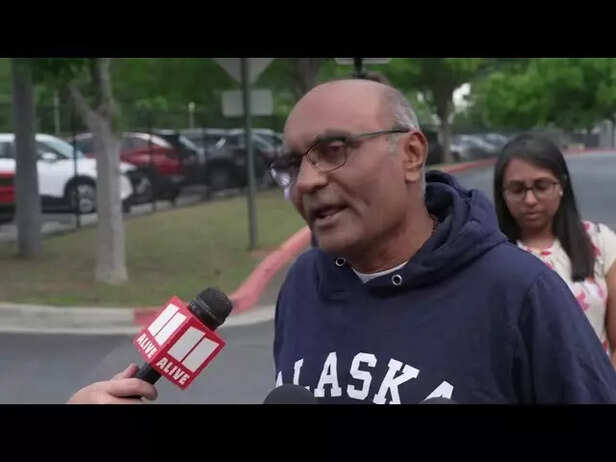
Image credit : X| @MarcWatkinsEsq| Mahendra Patel, the Indian-American engineer wrongfully arrested
On 18 March 2025, Patel visited a Walmart in Acworth, Georgia, to buy medication for his elderly mother. While asking another shopper for directions, her mobility scooter bumped a display, causing her two-year-old child to wobble. Patel instinctively reached out to steady the child. Surveillance footage later confirmed there was no struggle, no panic and no wrongdoing.
Yet three days later, Patel was arrested on suspicion of attempted kidnapping. He spent 47 days in jail without bond before video evidence cleared him entirely. This was not a case of confusion or poor communication. It was about who was believed and who was not.
When instinct becomes evidence and fear becomes fact
The legal system had time to act carefully. Instead, it moved decisively in the wrong direction. Despite access to video footage that contradicted the accusation, authorities chose to proceed with an arrest. A judge later denied Patel bail, describing him as a “danger to the community”, despite his lack of criminal history and the absence of corroborating evidence.
The decision-making revealed a troubling hierarchy of credibility. A white woman’s fear was treated as truth, while a brown man’s actions, even when captured on camera were viewed through suspicion. Patel did not flee the scene. He continued shopping, spoke with staff, paid using a debit card linked to his identity and left calmly.

Image credit : X| @MarcWatkinsEsq| Caroline Miller, whose false accusations led to the wrongful arrest of Mahendra Patel.
That debit card detail is particularly revealing. It indicates investigators had already reviewed the footage closely enough to identify Patel, yet still deemed him guilty. This is how racial bias often operates: quietly, reflexively and without explicit language. Not through slurs or overt hatred, but through assumptions about who looks dangerous and who deserves the benefit of doubt.
How the public reacted: outrage, disbelief and demands for accountability
As the details of Mahendra Patel’s case came to light, public outrage quickly mounted, especially on social media, where users expressed disbelief and anger over how an innocent man could be arrested, detained for weeks, and subjected to such a glaring miscarriage of justice.
One X user wrote: “I'm thrilled he's suing but what about the false claims… that woman needs to be held accountable!!”
I'm thrilled he's suing but what about the false claims..... that woman needs to be held accountable!!
— My America Gone Astray (@JanetJarred) December 29, 2025
Another added: “This story is so upsetting. I feel like the woman who made the completely false accusation should also be sued or face consequences. Since when are there zero consequences for filing a false police report which wastes police resources but more importantly harms an innocent man?”
A third reaction summed up the broader mood: “A grave miscarriage of justice. All involved should pay the price.”
These reactions highlight mounting frustration with a system that penalises the innocent while excusing those whose unfounded fears inflict lasting damage.
Why silence from institutions makes the damage worse
Much of the mainstream coverage focused on procedural failure, carefully avoiding any discussion of race. That omission matters. By refusing to acknowledge the racial dynamics at play, the media reduced the case to a bureaucratic error rather than highlighting a systemic problem. Without video evidence, Patel’s life could have been permanently destroyed. His freedom, it turns out, relied not on fairness but on the presence of indisputable evidence.

Image credit : X| @YahooNews| Mahendra Patel, wrongfully arrested over false kidnapping claim
In a decisive turn, all charges against Mahendra Patel have now been dropped. Prosecutors and the judge agreed to dismiss the case after reviewing new evidence and engaging in discussions between both parties. The Patel case serves as a stark warning, demonstrating how quickly ordinary actions can be criminalised when prejudice fills the gaps where evidence should prevail. Pretending otherwise only ensures that such injustices may occur again.
GTA 6 fans predict 'most annoying' bridge feature in the game
By Sneha Kumari

Did North West remove her controversial finger piercing?
By Sneha Kumari

12-year-old dies recreating Squid Game prank
By Sneha Kumari

Why is Taylor Swift’s Kansas City charity under scrutiny?
By Priya Prakash

Can Anthony Joshua fight again after the fatal car crash?
By Sneha Kumari

Fans roast Kanye’s post flaunting Bianca’s artwork
By Priya Prakash

Why did NBA security issue a warning to Stable Ronald during the Lakers game? Here's why Adin Ross got involved
By Sneha Kumari
