
Top 5 actions taken by Donald Trump in 2025: From mass deportations to tariffs, the moves that sparked courts & markets
Nancy Jaiswal | Dec 31, 2025, 14:18 IST

Image credit : X/Maga_Trigger | Trump’s 5 most defining calls of 2025 explained
Donald Trump’s second term began with swift executive action. From immigration crackdowns and trade tariffs to troop deployments and foreign mediation, these five decisions taken in 2025 shaped policy, triggered legal scrutiny and reset America’s domestic and global posture.
Donald Trump’s return to the White House in 2025 was followed by rapid policy moves aimed at reversing Biden-era decisions and advancing long-standing priorities. Several actions drew immediate court challenges, market reactions, or opposition from state leaders, while others altered US engagement overseas. Below are five major calls that defined Trump’s policy direction in 2025.
One of Trump’s earliest actions in office was the reinstatement of the Mexico City policy, commonly known as the global gag rule. The decision cut off US funding to international organisations that provide abortion services, offer counselling related to abortion, or advocate for abortion rights.
![Donald Trump’s second term began with swift executive action]() Originally introduced during Ronald Reagan’s presidency, the policy has historically been reversed and reinstated as administrations change. Abortion rights groups warned that the move could limit access to contraception and maternal healthcare services across multiple regions worldwide.
Originally introduced during Ronald Reagan’s presidency, the policy has historically been reversed and reinstated as administrations change. Abortion rights groups warned that the move could limit access to contraception and maternal healthcare services across multiple regions worldwide.
In January, Trump signed an executive order directing federal agencies to recognise only two sexes — male and female. Announcing the move during his inaugural address, Trump stated that it would be the official policy of the US government.
![Donald Trump’s return to the White House in 2025 was followed by rapid policy moves]() The order instructed federal departments to ensure that official identification documents, including passports and visas, list biological sex rather than gender identity. The decision marked a significant shift in federal policy and prompted responses from civil rights organisations.
The order instructed federal departments to ensure that official identification documents, including passports and visas, list biological sex rather than gender identity. The decision marked a significant shift in federal policy and prompted responses from civil rights organisations.
In March, Trump invoked the Alien Enemies Act of 1798 to fast-track deportations of individuals identified as members of the Venezuelan gang Tren de Aragua. The law, rarely used outside wartime contexts, was applied through a presidential proclamation that claimed the group operated with support from Venezuela’s government.
“The result is a hybrid criminal state that is perpetrating an invasion of and predatory incursion into the United States,” Trump said in a White House-issued statement.
However, in September, the 5th US Circuit Court of Appeals ruled that the administration could not use the law to deport Venezuelan nationals, stating that their presence did not qualify as an invasion by a foreign power.
In April, Trump declared a national emergency over the US trade deficit and used the International Emergency Economic Powers Act to impose wide-ranging tariffs. The move, described by Trump as “Liberation Day,” introduced a 10% baseline tariff on imports from nearly all countries, along with higher duties for selected nations.
![Top 5 policy moves by Donald Trump in 2025]() The announcement led to a global market sell-off. In response to the fallout, Trump later paused many of the tariffs for 90 days to allow negotiations with key trading partners.
The announcement led to a global market sell-off. In response to the fallout, Trump later paused many of the tariffs for 90 days to allow negotiations with key trading partners.
Beginning in June, Trump ordered National Guard deployments to several US cities in response to anti-immigration protests and rising crime. The first deployment was sent to Los Angeles, despite objections from California Governor Gavin Newsom and Mayor Karen Bass.
Trump later placed Washington, DC’s law enforcement under federal control using the Home Rule Act. In September, he authorised another National Guard deployment to Memphis, this time with the support of Tennessee’s Republican governor.
Together, these actions reflect Trump’s aggressive use of executive authority in his second term. They span social policy, immigration enforcement, economic intervention and federal control, and each triggered legal, political or market consequences. Collectively, they offer a clear view of how Trump shaped governance and power dynamics in 2025.
Reinstating the global ‘Gag Rule’ on abortion funding
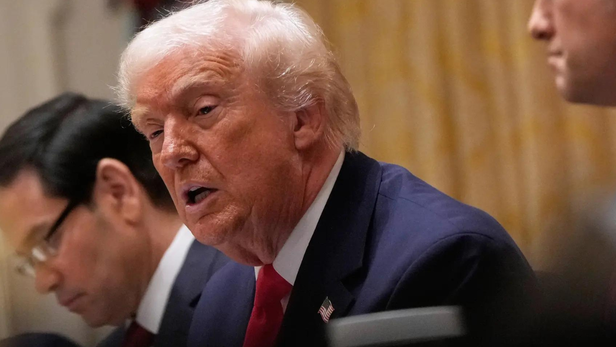
Image credit : X/Maga_Trigger | Donald Trump’s second term began with swift executive action
Mandating a binary definition of sex in federal policy
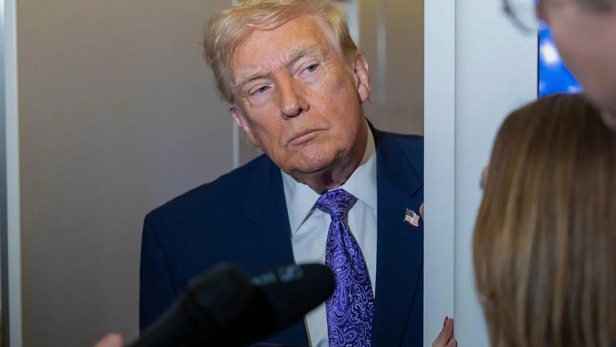
Image credit : X/Maga_Trigger | Donald Trump’s return to the White House in 2025 was followed by rapid policy moves
Invoking a wartime law to accelerate deportations
“The result is a hybrid criminal state that is perpetrating an invasion of and predatory incursion into the United States,” Trump said in a White House-issued statement.
However, in September, the 5th US Circuit Court of Appeals ruled that the administration could not use the law to deport Venezuelan nationals, stating that their presence did not qualify as an invasion by a foreign power.
Declaring a national trade emergency and imposing tariffs

Image credit : X/Maga_Trigger | Top 5 policy moves by Donald Trump in 2025
Deploying the national guard despite state opposition
Trump later placed Washington, DC’s law enforcement under federal control using the Home Rule Act. In September, he authorised another National Guard deployment to Memphis, this time with the support of Tennessee’s Republican governor.
Why these five decisions matter
GTA 6 fans predict 'most annoying' bridge feature in the game
By Sneha Kumari

Did North West remove her controversial finger piercing?
By Sneha Kumari

12-year-old dies recreating Squid Game prank
By Sneha Kumari

Why is Taylor Swift’s Kansas City charity under scrutiny?
By Priya Prakash

Can Anthony Joshua fight again after the fatal car crash?
By Sneha Kumari

Fans roast Kanye’s post flaunting Bianca’s artwork
By Priya Prakash

Why did NBA security issue a warning to Stable Ronald during the Lakers game? Here's why Adin Ross got involved
By Sneha Kumari
